When I started looking for ways to move an idea forward, I did not begin with a perfect network. I began with a search: what resources already exist around me, and who has made it their job to help local people build?
That question brought me to Bellflower’s entrepreneur program. The important part of the story is not that a program solved the business for me. It did not. The important part is that seeking community resources turned a private ambition into a set of conversations, exercises, and next actions.
Founders are told to be independent. Make the decision. Take the risk. Solve the problem. Independence matters, but isolation is not the same thing. A business still needs language, customers, information, suppliers, permits, feedback, and people willing to explain what you do not yet know. The sooner I understood that, the more useful the work became.
A city can be part of the tool kit.
People usually think about city government when something needs to be filed, inspected, or paid. That is only one side of the relationship. Cities also have an interest in helping residents create durable local businesses. Bellflower has supported entrepreneurial training through programs including the Bellflower Entrepreneurial Academy, Emprendedor@s, Maker 2 Market, and partnerships with organizations such as the Small Business Development Center and SCORE.
Those names matter because they point to different kinds of help: foundational business education, mentoring, workshops, and pathways for makers to test physical goods in a market. You may not need every resource. You do need to know that the map exists.
For me, the first lesson was simple: ask. Search the city website. Call economic development. Visit the library. Look for a local SBDC. Tell someone what you are trying to make in ordinary words. The right answer may be a class. It may be an introduction. It may be a form, a deadline, a correction, or a person who has already made the mistake you are about to make.
Structure turns energy into work.
An early idea can feel enormous and strangely weightless. You can think about it all day without changing it. A program adds edges. You have a session to attend, a question to answer, a number to find, or a description to improve. Even when the assignment seems basic, the deadline makes the idea touch the ground.
That structure also reveals where enthusiasm has been covering a gap. Who is the customer? What problem is the product solving? What does it cost to make? How will someone discover it? What needs to happen before the first sale and after the hundredth? None of these questions are glamorous. Together, they are the beginning of a system.
Proximity changes the conversation.
There is value in learning next to people who live and work in the same region. They know the streets, the customers, the rents, the venues, and the small frictions that do not appear in a national startup story. One person may be building a food business, another a service, another an object. The surface is different; the underlying decisions rhyme.
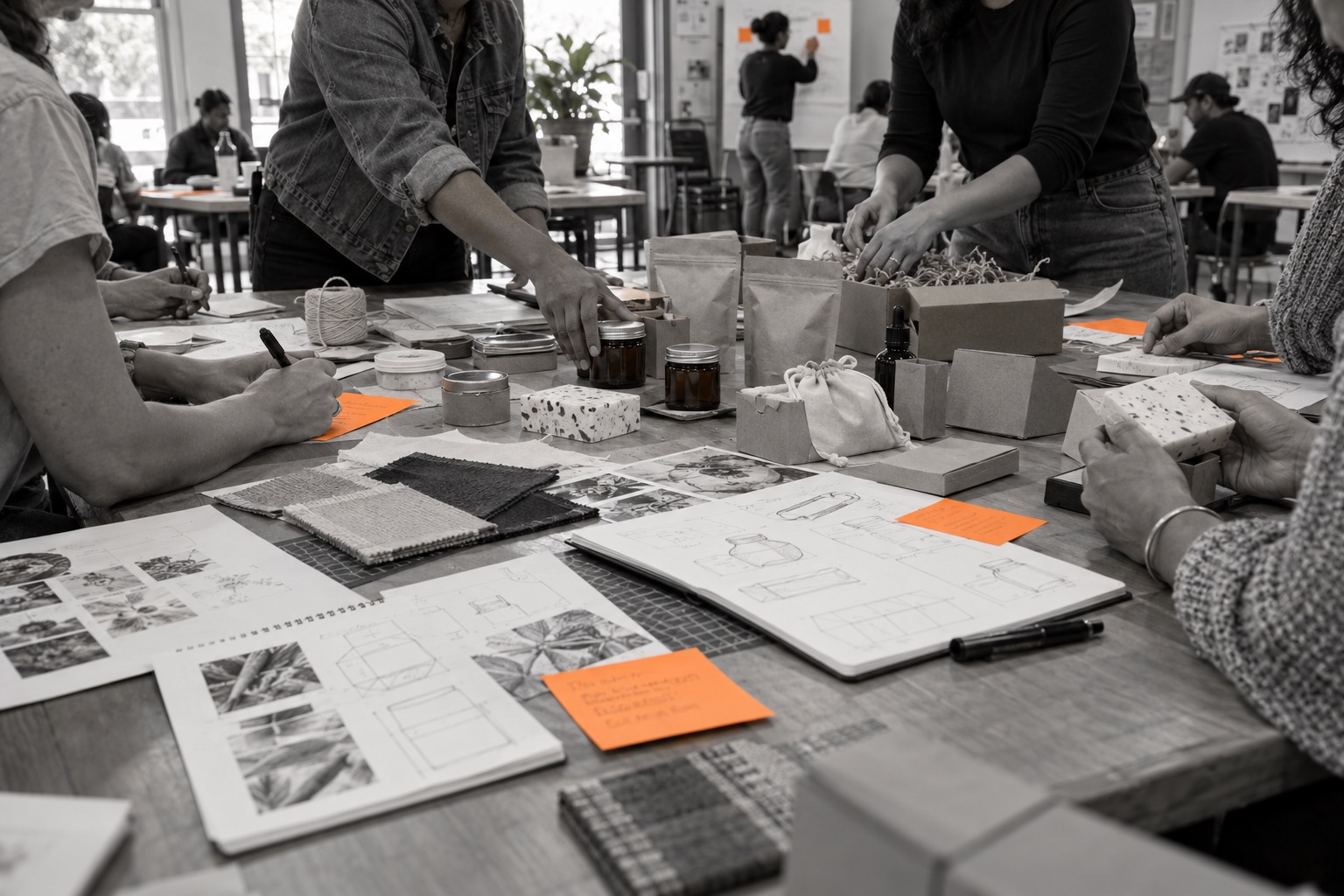
That mix can make a program feel less like a classroom and more like a temporary studio. People bring different levels of experience, different pressures, and different definitions of success. You see that entrepreneurship is not one personality type. It is a practice used by many kinds of people to create more control over how they work and what they contribute.
Community is infrastructure.
We recognize physical infrastructure because it is easy to photograph: roads, power lines, buildings, loading docks. Entrepreneurial infrastructure is quieter. It is the person who answers a question, the workshop that teaches a missing skill, the public program that lowers the cost of trying, and the room where an idea can be described before it is ready.
Layered Goods is being built through objects, tools, experiments, and the discipline of making again. It is also being built through that quieter infrastructure. Joining Bellflower’s entrepreneur program reminded me that asking for help is not outside the work. Finding the people and institutions that make local experimentation possible is part of the work.
If you are holding an idea alone, begin nearby. Your city may not have the exact answer. It may have the first door.