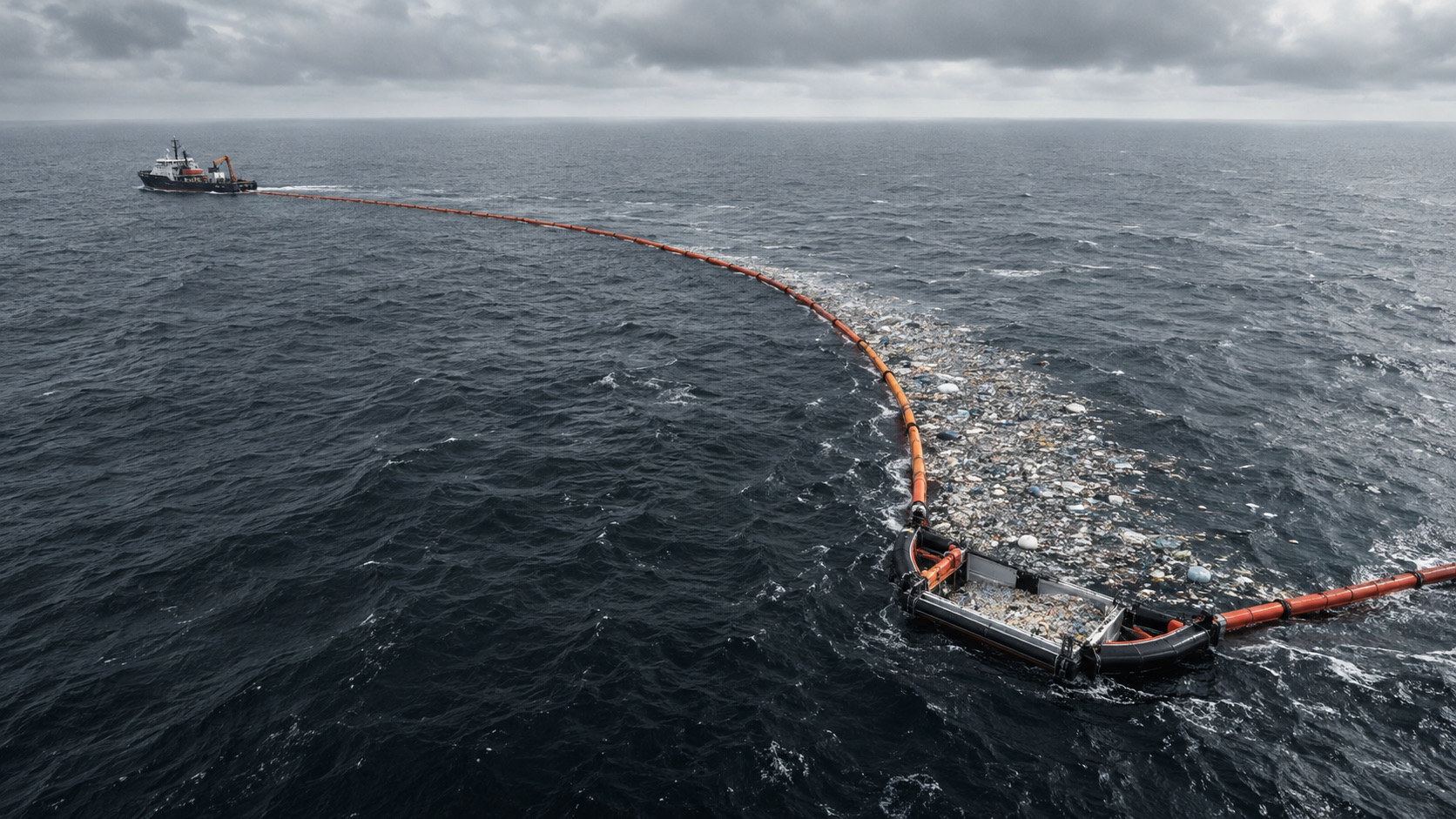
A photograph of plastic being lifted from blue water can make cleanup look like a moment. In practice, the work is a network: know where debris moves, meet it with the right tool, bring it ashore, sort it, document it, and keep the same flow from returning.
Plastic reaches the ocean through streets, rivers, stormwater, fishing activity, shipping, and direct disposal. Once there, it does not simply disappear. The National Oceanic and Atmospheric Administration notes that plastic does not fully biodegrade; it breaks into smaller pieces and can keep moving through marine environments. That turns a familiar material into a long-running systems problem.
Design for where the material is.
Open-ocean accumulation and a river carrying waste toward the coast are different conditions. A beach cleanup is different again. Each requires a tool sized to the place: floating barriers that concentrate debris, river interceptors positioned before waste reaches the sea, vessels and crews that can safely retrieve material, and local operations that can empty, maintain, and redeploy the equipment.
The Ocean Cleanup’s System 002 helped demonstrate this distinction. The organization reports that the system removed 282,787 kilograms of plastic during its campaign in the Great Pacific Garbage Patch and validated a method it could scale. System 03, deployed in 2023, enlarged the collection area and continued the move from a compact test toward a repeatable operating system.
By March 2026, the organization reported 50 million kilograms of trash removed across its global operations. The number is meaningful, but the more useful question is what sits behind it: hours at sea, boom configuration, weather windows, maintenance, vessel fuel, river partnerships, sorting capacity, and data about where plastic entered the system.
Prevention and removal belong together.
It is tempting to turn the debate into a choice. Stop plastic upstream, or remove what is already in the ocean. The water does not care about the argument. Legacy pollution remains in circulation while new material continues to arrive. NOAA emphasizes both prevention and cleanup, especially before debris reaches the open ocean where retrieval becomes difficult and expensive.
That means good cleanup design begins before the cleanup machine. Packaging decisions, waste collection, deposit systems, port practices, river infrastructure, and everyday disposal all change the load that reaches the coastline. Collection technology addresses the material already moving. Prevention changes the rate of arrival. Neither makes the other optional.
The overlooked work happens on land.
Bringing plastic to shore is not an ending. Wet, weathered marine debris can contain different polymers, ropes, nets, organic material, and objects that cannot be recycled in the same stream. It has to be weighed, characterized, sorted, stored, and routed. Recovered material needs a credible destination; otherwise the cleanup only relocates the problem.
This is where the language of logistics becomes useful. Logistics asks who touches the material next, how far it travels, what condition it arrives in, what information follows it, and where the bottleneck forms. It also asks whether a system can keep working after the demonstration team leaves.
The coolest hardware will not succeed without spare parts, trained crews, predictable funding, and a plan for bad weather. A dramatic prototype is the beginning of the design brief, not the end.
Make the invisible system visible.
Environmental work can be flattened into symbols: a turtle, a bottle, an island of trash. Those symbols create attention, but attention should lead toward structure. How does a city keep litter out of a waterway? How does a port report lost fishing gear? How does a cleanup team show what it collected and what happened afterward? How does a product designer reduce future recovery work before an object is manufactured?
The ocean is not a blank surface waiting for a heroic machine. It is a moving environment connected to every upstream choice. Treating cleanup as logistics does not make the mission less inspiring. It makes success more concrete: less plastic entering, more legacy debris leaving, and a system capable of repeating the work.